
 Library Science BooksMCQ Practice Set ₹259 • LIS Book (8th ed.) ₹489Book Store खोलें →
सहायक प्राध्यापक बनने के लिए UGC NET के अलावा एक और रास्ता है — राज्य पात्रता परीक्षा (State Eligibility Test, SET/SLET)। हर राज्य अपनी परीक्षा कराता है, और जिन राज्यों में लाइब्रेरी एंड इन्फ़ॉर्मेशन साइंस एक विषय है, वहाँ के आयोग अपने प्रश्नपत्र और उत्तर-कुंजियाँ सार्वजनिक रूप से प्रकाशित करते हैं। यह बात अधिकांश अभ्यर्थी नहीं जानते, और यही इस विषय की सबसे बड़ी मुफ़्त अभ्यास-सामग्री है।
Besides UGC NET, there is a second route to becoming an Assistant Professor — the State Eligibility Test (SET/SLET). Every state conducts its own, and in the states where Library and Information Science is an offered subject, the commissions publish their question papers and answer keys openly. Most candidates do not know this, and it is the largest free practice material available in the subject.
हमने एक-एक राज्य की आधिकारिक वेबसाइट खंगालकर ये सब एक जगह जमा किए हैं — इस समय कुल 150 आधिकारिक PDF। नीचे राज्यवार सूची है; हर कार्ड पर क्लिक करने से उस राज्य का पूरा पेज खुलेगा।
We have gone through each state’s official website and gathered them in one place — 150 official PDFs at present. The state-wise list is below; each card opens that state’s full page.
सबसे ज़रूरी बात: इन सबका पाठ्यक्रम UGC NET पर ही आधारित है। इसलिए आप किसी भी राज्य में रहते हों, और चाहे NET की तैयारी कर रहे हों या किसी राज्य की लाइब्रेरियन भर्ती की — ये सारे प्रश्नपत्र आपके काम के हैं। SET प्रमाणपत्र केवल उसी राज्य में मान्य होता है, पर अभ्यास की सामग्री की कोई सीमा नहीं होती। / The point that matters most: all of these follow the UGC NET syllabus. So wherever you live, and whether you are preparing for NET or for a librarian recruitment in some state, every one of these papers is useful to you. A SET certificate is valid only in the state that issued it, but practice material knows no such boundary.
राज्यवार SET प्रश्नपत्र — सबसे बड़े भंडार से शुरू / State-wise SET Papers — Largest Archive First
जिन राज्यों में SET में लाइब्रेरी साइंस नहीं है / States Where SET Does Not Offer Library Science
यह जानना उतना ही ज़रूरी है, क्योंकि कई अभ्यर्थी बिना जाँचे आवेदन की तैयारी कर बैठते हैं।
This matters just as much, because candidates often start preparing without checking.
| हिमाचल प्रदेश — HP SET | ❌ विषय-सूची में LIS नहीं। 2023 में कुल 24 विषय थे, 2018 में 22 — दोनों में नहीं। / Not in the subject list: 24 subjects in 2023 and 22 in 2018, with LIS in neither. |
| हिमाचल में विकल्प / Alternative in HP | उच्च न्यायालय सहायक लाइब्रेरियन और HPPSC की भर्ती — हिमाचल का पूरा पेज देखें |
| ओडिशा | ❌ OSSC और OPSC, दोनों की प्रश्नपत्र-सूची में लाइब्रेरियन का कोई पद नहीं। RTI लगाई है। |
| बिहार, झारखंड | ❌ आधिकारिक लाइब्रेरी प्रश्नपत्र सार्वजनिक नहीं। |
किस राज्य का पेपर कब काम आता है / Which State’s Paper Serves Which Purpose
सारे पेपर एक जैसे नहीं हैं। किस काम के लिए कौन-सा सबसे अच्छा है, यह रहा:
Not all the papers serve the same purpose. Here is which works best for what:
| सबसे ज़्यादा अभ्यास चाहिए / Most practice volume | गुजरात — 19 पूरे पेपर, यानी 19 मॉक टेस्ट, सरकारी कुंजी के साथ |
| उत्तर सहित प्रश्नपत्र चाहिए / Papers with answers printed in | आंध्र (APPSC) और मध्य प्रदेश उच्च न्यायालय — प्रश्न, विकल्प और सही उत्तर एक साथ |
| कठिन प्रश्नों का अभ्यास / Harder questions | गुजरात और बंगाल के पेपर-III — पुराना तीन-पेपर प्रारूप, आज के पेपर-II से गहरा |
| हाल का स्तर जानना / Current difficulty | कर्नाटक 2026 और गुजरात नवम्बर 2025 — सबसे नई परीक्षाएँ |
| कुंजी कैसे बदलती है, यह समझना / How keys change | कर्नाटक (तात्कालिक → परिष्कृत → अंतिम) और आंध्र (प्रारंभिक → अंतिम) |
| हिंदी माध्यम / Hindi medium | मध्य प्रदेश — MPPSC का प्रश्नपत्र द्विभाषी होता है |
एक सावधानी: उत्तर-कुंजी लगाने से पहले अपनी पुस्तिका की सीरीज़ देख लें। बंगाल में कुंजी केवल X सीरीज़ की आती है — Y सीरीज़ वालों को पहले जंबलिंग ऑर्डर से प्रश्न-क्रम मिलाना पड़ता है, वरना पूरा स्कोर ग़लत निकलेगा। / One caution: check your booklet series before applying a key. In West Bengal the key is issued for the X series only — candidates of the Y series must first map the question order through the jumbling order, or the whole score comes out wrong.
इनसे तैयारी कैसे करें / How to prepare with these
- छह महीने की योजना इस क्रम में बनाइए। पहले महीने में गुजरात के सबसे नए पाँच पेपर, दूसरे में बंगाल के तीन, तीसरे में तेलंगाना और आंध्र। इस तरह तीन महीने में ही 15 पूरे पेपर हो जाएँगे। / Build a six-month plan in this order: the five most recent Gujarat papers in month one, three Bengal papers in month two, Telangana and Andhra in month three. That is fifteen complete papers within three months.
- हर पेपर घड़ी लगाकर, एक बैठक में। टुकड़ों में हल करने से पता ही नहीं चलता कि असली परीक्षा में आप कहाँ थकते हैं। / One paper, one sitting, against a clock. Solving in pieces never shows you where you tire in the real examination.
- गलत प्रश्नों की विषयवार डायरी रखिए। 15 पेपर के बाद आपके पास 1,500 से ज़्यादा प्रश्नों का डेटा होगा। उसमें जो तीन-चार अध्याय बार-बार आएँ, असली तैयारी वहीं बाक़ी है — बाक़ी सब दोहराना भर है। / Keep a topic-wise diary of what you get wrong. After fifteen papers you will have data on more than 1,500 questions. The three or four chapters that keep recurring are where the real work remains; the rest is revision.
- पेपर-I को अलग दिन दीजिए। विषय में अच्छा करके भी पेपर-I में अटकने वाले हर साल मिलते हैं। बंगाल और मध्य प्रदेश, दोनों के पेपर-I हमारे पास हैं। / Give Paper-I its own day. Every year candidates do well in the subject and come unstuck in Paper-I. We have the Paper-I from both Bengal and Madhya Pradesh.
- तेईस साल का रुझान पढ़िए। गुजरात के 2002 वाले पेपर से आज तक जो टॉपिक हर बार आया है — वर्गीकरण, सूचीकरण, रंगनाथन, सूचना स्रोत — वही परीक्षा का स्थायी केंद्र है। जो सिर्फ़ नए पेपरों में दिखे (ओपन एक्सेस, मेटाडेटा, डिजिटल भंडार), वह बढ़ता हुआ हिस्सा है। / Read the twenty-three-year trend. What has appeared in every Gujarat paper since 2002 — classification, cataloguing, Ranganathan, information sources — is the permanent core. What shows up only in recent papers — open access, metadata, digital repositories — is the growing share.
- अपने राज्य की भर्ती भी देखते रहिए। SET पात्रता देता है, नौकरी भर्ती परीक्षा से मिलती है। लाइब्रेरी जॉब्स पेज पर नई भर्तियाँ आती रहती हैं। / Keep an eye on recruitment in your own state. A SET gives eligibility; the job comes through a recruitment examination.
अगर ऊपर दिए गए प्रश्नपत्र में कोई प्रश्न, टॉपिक या चैप्टर समझ में न आए, तो नीचे दिया गया कोर्स उसी कमी को भरने के लिए बना है:
- हिंदी और English दोनों में — जिस भाषा में पेपर देना है, अभ्यास भी उसी भाषा में।
- नवीनतम सिलेबस के अनुसार अपडेटेड — UGC NET और अन्य भर्तियों के सिलेबस में जो बदलाव हुए हैं, वे सब शामिल।
- लाइब्रेरी साइंस के ताज़ा करंट अफेयर्स — नए नियम, नई संस्थाएँ, नए पदाधिकारी और नई योजनाएँ, जो पुरानी किताबों में नहीं मिलतीं।
- पुराने प्रश्नपत्र भी अंदर शामिल — बिखरे हुए नहीं, बल्कि चैप्टर-वाइज़ बँटे हुए, ताकि एक ही टॉपिक के सारे पुराने प्रश्न एक साथ हल हों।
- 23,000+ प्रश्न, 138 चैप्टर, 700+ टॉपिक — हर टेस्ट के बाद रिपोर्ट मिलती है, जिससे कमज़ोर टॉपिक तुरंत पकड़ में आ जाता है।
- फ्री डेमो उपलब्ध — पैसे लगाने से पहले खुद परख लें।
सबसे अच्छा तरीका: ऊपर दिया गया पुराना प्रश्नपत्र पहले खुद हल करें, फिर जिन टॉपिक में गलती हुई उन्हीं चैप्टर के टेस्ट कोर्स में लगाएँ। दो-तीन हफ़्ते में फ़र्क़ साफ़ दिखने लगेगा।
If any question, topic or chapter in the paper above is still unclear, the course below is built to close exactly that gap:
- In both Hindi and English — practise in the same language you will write the exam in.
- Updated to the latest syllabus — every recent change in the UGC NET and other recruitment syllabi is already covered.
- Latest library science current affairs — new rules, new institutions, new office bearers and new schemes that older books simply do not carry.
- Previous year papers included — not scattered, but sorted chapter-wise, so every old question on one topic comes together.
- 23,000+ questions, 138 chapters, 700+ topics — a report after every test shows your weak topics at once.
- Free demo available — try it yourself before you pay.
The best way: first solve the paper above on your own, then take the chapter tests for exactly the topics you got wrong. The difference shows within two or three weeks.
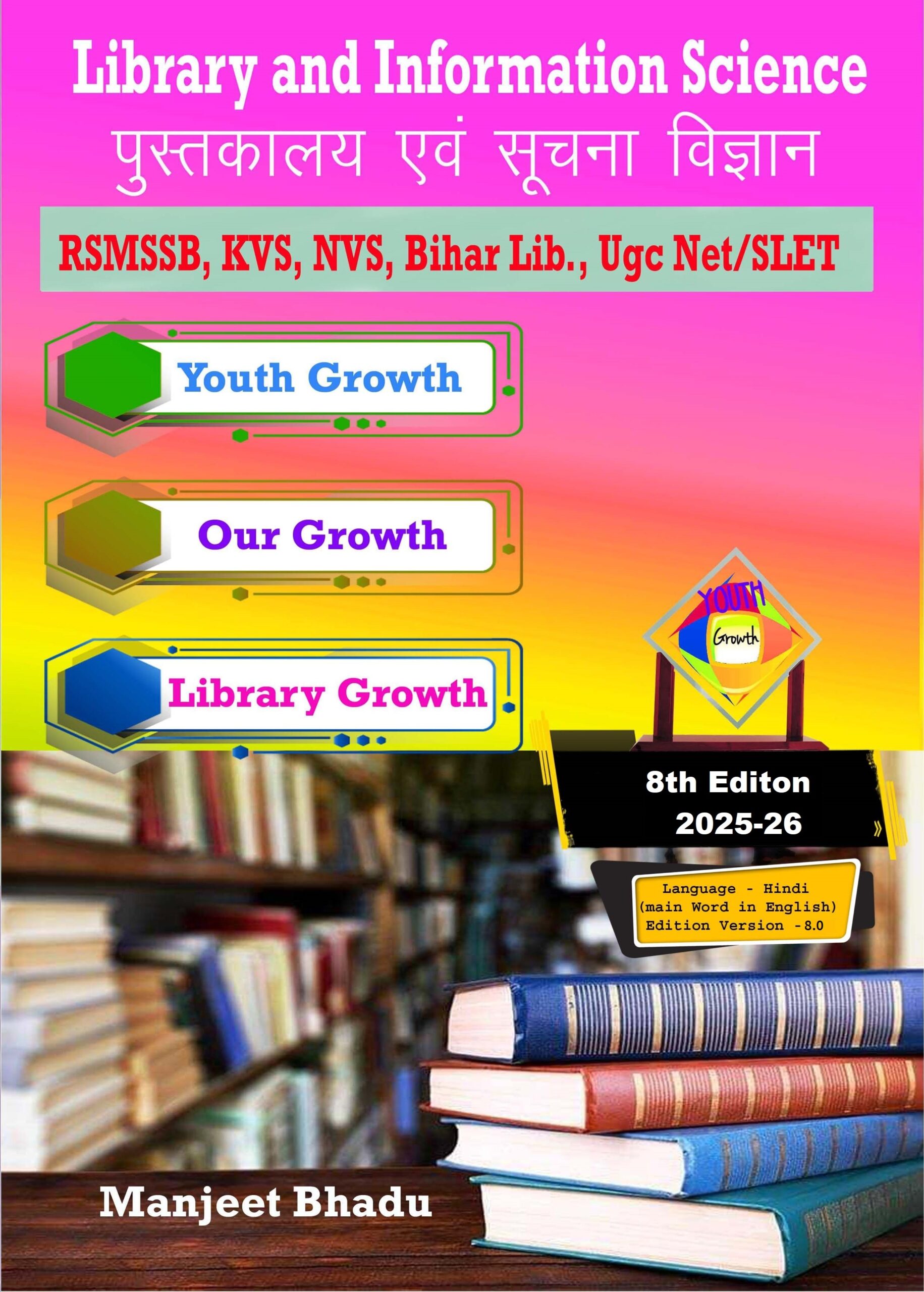
8th editionLibrary and Information Science BookEMRS · CRE · RPSC College Librarian · DSSSB · RSMSSB · KVS · NVS · Bihar Librarian · UGC NETपूरा सिलेबस, टॉपिक-वाइज़ नोट्स · घर तक डिलीवरी★ 4.7 (81)₹489
Hindi + EnglishLibrary Science MCQ Practice Set — Volume 1RPSC · RSMSSB · EMRS · DSSSB · KVS · NVS · UGC NET7000+ वस्तुनिष्ठ प्रश्न, चैप्टर-वाइज़ प्रैक्टिस सेट · उत्तर सहित★ 4.6 (36)₹259
10 अभ्यास प्रश्न / 10 Practice MCQs
सभी राज्यों के SET पेपरों में बार-बार लौटने वाले 10 प्रश्न — यही वे टॉपिक हैं जो हर जगह आते हैं।
Ten questions that keep returning across every state’s SET papers — these are the topics that appear everywhere.
रंगनाथन के पाँच सूत्रों में पहला सूत्र क्या है?What is the first of Ranganathan’s Five Laws?
- (a) पुस्तकें उपयोग के लिए हैं / Books are for use
- (b) हर पाठक को उसकी पुस्तक / Every reader his or her book
- (c) हर पुस्तक को उसका पाठक / Every book its reader
- (d) पाठक का समय बचाइए / Save the time of the reader
उत्तर देखें / Show answer
(a) पुस्तकें उपयोग के लिए हैं / Books are for use — यही सूत्र पुस्तकालय के स्थान, समय, फ़र्नीचर और खुली अलमारी जैसी व्यवस्थाओं का आधार बनता है।This law underlies decisions about the library’s location, hours, furniture and open access to shelves.
DDC के आविष्कारक कौन थे और पहला संस्करण कब आया?Who devised DDC and when did its first edition appear?
- (a) चार्ल्स कटर, 1876 / Charles Cutter, 1876
- (b) मेल्विल डुई, 1876 / Melvil Dewey, 1876
- (c) हेनरी ब्लिस, 1935 / Henry Bliss, 1935
- (d) एस. आर. रंगनाथन, 1933 / S. R. Ranganathan, 1933
उत्तर देखें / Show answer
(b) मेल्विल डुई, 1876 / Melvil Dewey, 1876 — डुई दशमलव वर्गीकरण 1876 में आया और आज भी दुनिया में सबसे अधिक प्रयुक्त वर्गीकरण पद्धति है।Dewey Decimal Classification appeared in 1876 and remains the most widely used classification scheme in the world.
“हर पुस्तक को उसका पाठक” सूत्र किस व्यवस्था को सबसे अधिक उचित ठहराता है?Which arrangement does “Every book its reader” most justify?
- (a) बंद अलमारी / Closed access
- (b) खुली अलमारी और प्रदर्शन / Open access and display
- (c) सदस्यता शुल्क / Membership fee
- (d) पुस्तक पर रोक / Restricting books
उत्तर देखें / Show answer
(b) खुली अलमारी और प्रदर्शन / Open access and display — तीसरा सूत्र कहता है कि हर पुस्तक तक पाठक पहुँच सके — इसीलिए खुली अलमारी, प्रदर्शन और प्रचार का महत्व है।The third law holds that every book should reach a reader, which is why open shelves, display and publicity matter.
भारत में राष्ट्रीय पुस्तकालय कहाँ है?Where is the National Library of India?
- (a) नई दिल्ली / New Delhi
- (b) कोलकाता / Kolkata
- (c) मुंबई / Mumbai
- (d) चेन्नई / Chennai
उत्तर देखें / Show answer
(b) कोलकाता / Kolkata — राष्ट्रीय पुस्तकालय कोलकाता के बेलवेडियर एस्टेट में है और देश का सबसे बड़ा पुस्तकालय है।The National Library is at Belvedere Estate in Kolkata and is the largest library in the country.
“सूचना पुनर्प्राप्ति” में “प्रिसिजन” (precision) और “रिकॉल” (recall) का संबंध कैसा होता है?How are precision and recall related in information retrieval?
- (a) दोनों साथ-साथ बढ़ते हैं / Both rise together
- (b) प्रायः एक बढ़ने पर दूसरा घटता है / Raising one usually lowers the other
- (c) दोनों का कोई संबंध नहीं / They are unrelated
- (d) दोनों हमेशा बराबर रहते हैं / They are always equal
उत्तर देखें / Show answer
(b) प्रायः एक बढ़ने पर दूसरा घटता है — खोज को संकीर्ण करने पर प्रिसिजन बढ़ती है पर प्रासंगिक दस्तावेज़ छूट जाते हैं (रिकॉल घटती है); खोज चौड़ी करने पर उल्टा होता है।Narrowing a search raises precision but misses relevant documents, lowering recall; broadening it does the reverse.
CCC (Classified Catalogue Code) किसने लिखा?Who wrote the Classified Catalogue Code (CCC)?
- (a) चार्ल्स कटर / Charles Cutter
- (b) एस. आर. रंगनाथन / S. R. Ranganathan
- (c) सेमूर लुबेट्ज़की / Seymour Lubetzky
- (d) मेल्विल डुई / Melvil Dewey
उत्तर देखें / Show answer
(b) एस. आर. रंगनाथन / S. R. Ranganathan — CCC रंगनाथन ने 1934 में दिया; यह वर्गीकृत सूची के लिए नियम-संहिता है, जबकि AACR शब्दानुक्रमिक सूची के लिए।Ranganathan gave the CCC in 1934; it is the code for a classified catalogue, whereas AACR serves the dictionary catalogue.
“सूचना साक्षरता” (Information Literacy) का मूल अर्थ क्या है?What does “information literacy” essentially mean?
- (a) पढ़ना-लिखना आना / Being able to read and write
- (b) सूचना की ज़रूरत पहचानना, उसे खोजना, आँकना और नैतिक रूप से उपयोग करना / Recognising a need for information, finding it, evaluating it and using it ethically
- (c) कंप्यूटर चलाना आना / Knowing how to use a computer
- (d) पुस्तकालय का सदस्य होना / Being a library member
उत्तर देखें / Show answer
(b) सूचना की ज़रूरत पहचानना, उसे खोजना, आँकना और नैतिक रूप से उपयोग करना — यही कारण है कि सूचना साक्षरता कंप्यूटर साक्षरता से बड़ी अवधारणा मानी जाती है।This is why information literacy is treated as a larger idea than computer literacy.
IFLA का मुख्यालय किस शहर में है?In which city is IFLA headquartered?
- (a) पेरिस / Paris
- (b) द हेग / The Hague
- (c) जिनेवा / Geneva
- (d) लंदन / London
उत्तर देखें / Show answer
(b) द हेग / The Hague — अंतरराष्ट्रीय पुस्तकालय संघ एवं संस्थान महासंघ (IFLA) का मुख्यालय नीदरलैंड्स के द हेग में है; UNESCO पेरिस में है।The International Federation of Library Associations and Institutions is headquartered at The Hague in the Netherlands; UNESCO is in Paris.
“थिसॉरस” (thesaurus) का पुस्तकालय विज्ञान में क्या उपयोग है?What is a thesaurus used for in library science?
- (a) पुस्तकों की गिनती / Counting books
- (b) नियंत्रित शब्दावली से अनुक्रमणिकन और खोज / Indexing and searching with a controlled vocabulary
- (c) पुस्तक बाइंडिंग / Binding books
- (d) सदस्य पंजीकरण / Member registration
उत्तर देखें / Show answer
(b) नियंत्रित शब्दावली से अनुक्रमणिकन और खोज — थिसॉरस पर्यायवाची, व्यापक, संकीर्ण और संबंधित पदों के संबंध दिखाता है, जिससे खोज एक समान और सटीक रहती है।A thesaurus maps synonyms and broader, narrower and related terms, keeping indexing and searching consistent and precise.
“सामयिक सूचना सेवा” (CAS) और “वैयक्तिक सूचना प्रसार” (SDI) में मुख्य अंतर क्या है?What is the main difference between Current Awareness Service (CAS) and Selective Dissemination of Information (SDI)?
- (a) CAS सबके लिए एक जैसी, SDI हर उपयोक्ता की रुचि-रूपरेखा के अनुसार / CAS is the same for everyone, SDI is matched to each user’s interest profile
- (b) CAS सशुल्क, SDI निःशुल्क / CAS is paid, SDI is free
- (c) CAS केवल पुस्तकों की, SDI केवल पत्रिकाओं की / CAS covers only books, SDI only journals
- (d) कोई अंतर नहीं / No difference
उत्तर देखें / Show answer
(a) CAS सबके लिए एक जैसी, SDI हर उपयोक्ता की रुचि-रूपरेखा के अनुसार — दोनों नई सूचना की जानकारी देते हैं, पर SDI में पहले उपयोक्ता की रुचि-रूपरेखा बनाई जाती है और उसी से मेल खाती सामग्री भेजी जाती है।Both alert users to new information, but SDI first builds a profile of the user’s interests and sends only what matches it.
पूछे जाने वाले प्रश्न / Frequently asked
मैं बिहार/उत्तर प्रदेश में रहता हूँ, क्या गुजरात या बंगाल के पेपर मेरे काम के हैं? बिलकुल। पाठ्यक्रम UGC NET का ही है, इसलिए प्रश्न वही हैं जो आपकी परीक्षा में आएँगे। आप उस राज्य की SET नहीं दे सकते, पर पढ़ने पर कोई रोक नहीं — और यही इस पेज का पूरा मक़सद है।
I live in Bihar or Uttar Pradesh — are the Gujarat or Bengal papers any use to me? Entirely. The syllabus is the UGC NET one, so the questions are the questions you will face. You cannot sit that state’s SET, but nothing stops you studying its papers — which is the whole purpose of this page.
क्या एक से अधिक राज्यों की SET दी जा सकती है? हाँ, यदि आप उस राज्य की पात्रता शर्तें पूरी करते हों। कई अभ्यर्थी NET के साथ-साथ अपने राज्य की SET भी देते हैं, ताकि दोनों रास्ते खुले रहें।
Can one sit more than one state’s SET? Yes, if you meet that state’s eligibility conditions. Many candidates sit their own state’s SET alongside NET so that both routes stay open.
जिन राज्यों के पेपर यहाँ नहीं हैं, उनका क्या? दो कारण हो सकते हैं — या तो उस राज्य की SET में लाइब्रेरी साइंस विषय ही नहीं (जैसे हिमाचल), या आयोग प्रश्नपत्र प्रकाशित नहीं करता। जो हटा दिए गए हैं, उनके लिए हमने RTI आवेदन की सूची बनाई है और मिलते ही यहाँ जोड़े जाएँगे।
What about the states not listed here? Either that state’s SET does not offer library science as a subject (Himachal, for instance), or the commission does not publish its papers. Where papers were published and later removed, we have a list of RTI applications in hand and will add them here as they arrive.
और पुराने प्रश्नपत्र कहाँ मिलेंगे? पुराने प्रश्नपत्र वाले पेज पर देश भर की 120 से अधिक भर्ती और पात्रता परीक्षाओं के प्रश्नपत्र संस्थावार जमा हैं।
Where can more old papers be found? The old question papers page collects papers from more than 120 recruitment and eligibility examinations across the country, arranged by institution.
📝 Youth Growth Online Test Series – परीक्षा की पूरी तैयारी (Hindi + English)
नीचे दिए किसी भी Test Series में Free Demo देखें या सीधे खरीदें।
📚 Recommended books & practice sets
View all books → Youth Growth Library Science MCQ Practice SET (Hindi And English) Volume-1 For-RPSC, RSMSSB, EMRS, DSSSB, KVS, NVS, UGC NET By ManjeetBhadu
4.6(36)Youth Growth Library Science MCQ Practice SET (Hindi And English) Volume-1 Youth Growth Library Science MCQ Practice SET…
Youth Growth Library and Information Science Book - 8th edition For EMRS librarian Book, RPSC college Librarian Book, DSSSB Librarian book, RSMSSB Librarian book, KVS Librarian book, NVS Librarian book, Bihar Librarian book, UGC NET Librarian book
4.7(81)Youth growth Our Growth Library Growth book (Library and Information Science Exercise Book) for EMRS librarian Book, RPSC…
Your order
⏳ Payment verification takes up to 24 hours. Once verified, courier dispatch and shipment processing will begin within 1 working day.