
 Library Science BooksMCQ Practice Set ₹259 • LIS Book (8th ed.) ₹489Book Store खोलें →
पूर्वोत्तर भारत के आठों राज्यों के लिए एक ही पात्रता परीक्षा होती है — SLET (State Level Eligibility Test), जिसे राज्य स्तरीय पात्रता परीक्षा आयोग, असम (पूर्वोत्तर क्षेत्र), उत्तर जालुकबाड़ी, गुवाहाटी कराता है। असम, अरुणाचल, मणिपुर, मेघालय, मिज़ोरम, नागालैंड, त्रिपुरा और सिक्किम — सबके अभ्यर्थी यही परीक्षा देते हैं, और लाइब्रेरी एंड इन्फ़ॉर्मेशन साइंस इसके विषयों में शामिल है।
All eight states of North East India share a single eligibility test — the SLET, conducted by the State Level Eligibility Test Commission, Assam (N E Region) at North Jalukbari, Guwahati. Candidates from Assam, Arunachal Pradesh, Manipur, Meghalaya, Mizoram, Nagaland, Tripura and Sikkim all sit this one examination, and Library and Information Science is among its subjects.
इस पेज पर आयोग की 8 आधिकारिक PDF हैं — 2023 से 2026 तक, चार वर्षों की उत्तर-कुंजियाँ (2025 की मूल और संशोधित, दोनों), लाइब्रेरी एंड इन्फ़ॉर्मेशन साइंस का आधिकारिक पाठ्यक्रम, पेपर-I का पाठ्यक्रम और सूचना विवरणिका।
This page carries 8 official PDFs from the commission — four years of answer keys, 2023 to 2026 (both the original and the revised key for 2025), the official Library and Information Science syllabus, the Paper-I syllabus and the information brochure.
उत्तर-कुंजियाँ — 2023 से 2026 / Answer Keys — 2023 to 2026
आयोग हर वर्ष की कुंजी एक ही PDF में, विषयवार और पेपरवार प्रकाशित करता है — यानी एक फ़ाइल में सभी विषयों के उत्तर। लाइब्रेरी एंड इन्फ़ॉर्मेशन साइंस का हिस्सा उसी में “Subject: Library and Information Science, Paper – II” शीर्षक के नीचे मिलेगा। फ़ाइल खोलकर Ctrl+F से “Library” खोज लें, सीधे वहीं पहुँच जाएँगे।
The commission publishes each year’s key as a single PDF, arranged subject-wise and paper-wise — all subjects in one file. The library science portion sits under the heading “Subject: Library and Information Science, Paper – II“. Open the file and search for “Library” with Ctrl+F to jump straight to it.
2025 की दोनों कुंजियाँ दी हैं — मूल और संशोधित। दोनों को मिलाकर देखिए: जिन प्रश्नों के उत्तर बदले या जिन पर “No correct option” लिखा गया, वे विवादित प्रश्न हैं और ऐसे टॉपिक परीक्षा में लौटते रहते हैं। मिलान हमेशा संशोधित कुंजी से कीजिए। / Both the original and the revised key for 2025 are given. Read them together: questions whose answer changed, or which were marked “No correct option“, are the contested ones, and such topics keep returning. Always score yourself against the revised key.
आधिकारिक पाठ्यक्रम और परीक्षा प्रारूप / Official Syllabus and Exam Pattern
तैयारी शुरू करने से पहले यही दो फ़ाइलें पढ़नी चाहिए। पेपर-I सभी विषयों के अभ्यर्थियों के लिए एक ही है — शिक्षण एवं शोध अभिक्षमता — और पेपर-II आपके विषय का।
These are the two files to read before starting. Paper-I is common to candidates of every subject — teaching and research aptitude — and Paper-II is on your own subject.
| परीक्षा / Exam | SLET — राज्य स्तरीय पात्रता परीक्षा, पूर्वोत्तर क्षेत्र / State Level Eligibility Test, N E Region |
| आयोग / Commission | राज्य स्तरीय पात्रता परीक्षा आयोग, असम — उत्तर जालुकबाड़ी, गुवाहाटी 781014 |
| कवर राज्य / States covered | असम, अरुणाचल प्रदेश, मणिपुर, मेघालय, मिज़ोरम, नागालैंड, त्रिपुरा, सिक्किम |
| विषय / Subjects | लगभग 25–31 विषय, जिनमें लाइब्रेरी एंड इन्फ़ॉर्मेशन साइंस शामिल |
| पेपर-I / Paper-I | शिक्षण एवं शोध अभिक्षमता · 100 अंक · 1 घंटा |
| पेपर-II / Paper-II | विषय-आधारित · 200 अंक · 2 घंटे |
| पुस्तिका कोड / Booklet code | X (और अन्य कोड) / X and other codes |
| प्रश्नपत्र / Question papers | आयोग प्रकाशित नहीं करता — केवल उत्तर-कुंजी / Not published by the commission — keys only |
| उपलब्ध वर्ष / Years available | 2023, 2024, 2025, 2026 |
प्रश्नपत्र क्यों नहीं मिलते — और उसका हल / Why the Papers Are Missing, and What to Do
SLET आयोग उत्तर-कुंजियाँ तो पूरी निष्ठा से प्रकाशित करता है, पर प्रश्नपत्र नहीं। हमने 26 नवम्बर 2026 को आयोग की वेबसाइट का सिटमैप, अधिसूचना पृष्ठ और पाठ्यक्रम पृष्ठ, तीनों जाँचे — प्रश्नपत्र कहीं नहीं हैं। यह कर्नाटक के K-SET जैसी ही स्थिति है।
The SLET Commission publishes its answer keys diligently but not the question papers. On 26 November 2026 we went through the commission’s sitemap, notification page and syllabus page — the papers are nowhere on the site. The position is the same as Karnataka’s K-SET.
इसका व्यावहारिक हल: अभ्यास के लिए उन राज्यों के पूरे प्रश्नपत्र लीजिए जो उन्हें प्रकाशित करते हैं — गुजरात के 31 और पश्चिम बंगाल के 14 प्रश्नपत्र हमारे पास हैं, और पाठ्यक्रम लगभग वही है। फिर अपना स्तर जाँचने के लिए SLET की कुंजियों का उपयोग कीजिए। दोनों के लिंक नीचे हैं। / The practical answer: use the complete papers from the states that do publish them — we hold 31 from Gujarat and 14 from West Bengal, on much the same syllabus — and then use the SLET keys to check your level. Links to both are below.
इनसे तैयारी कैसे करें / How to prepare with these
- पहले आधिकारिक पाठ्यक्रम पढ़िए, फिर कुछ और। SLET का पाठ्यक्रम UGC NET के ढाँचे पर है पर इकाइयों का क्रम और ज़ोर अलग हो सकता है — ऊपर दी गई PDF ही प्रमाण है, किसी वेबसाइट की सूची नहीं। / Read the official syllabus before anything else. The SLET syllabus follows the UGC NET framework, but the order and emphasis of units can differ — the PDF above is the authority, not any website’s summary.
- अभ्यास के लिए गुजरात और बंगाल के पूरे प्रश्नपत्र लीजिए। SLET प्रश्नपत्र नहीं देता, पर गुजरात के 31 प्रश्नपत्र और बंगाल के 14 उपलब्ध हैं, उसी पाठ्यक्रम पर। यही सबसे बड़ा व्यावहारिक रास्ता है। / Use the complete Gujarat and Bengal papers for practice. SLET gives no papers, but 31 from Gujarat and 14 from Bengal are available on the same syllabus. This is the most practical route.
- 2025 की दोनों कुंजियाँ साथ रखकर देखिए। मूल और संशोधित के बीच जो उत्तर बदले — और जिन प्रश्नों पर “No correct option” लिखा गया — वे विवादित टॉपिक हैं। परीक्षा ऐसे टॉपिक पर लौटती रहती है। / Lay the two 2025 keys side by side. The answers that changed between the original and the revised key, and the questions marked “No correct option”, mark the contested topics. Examinations keep returning to them.
- पेपर-I को अलग समय दीजिए — 100 अंक कम नहीं होते। विषय में अच्छा करके भी पेपर-I में अटकने वाले हर वर्ष मिलते हैं। उसका अलग पाठ्यक्रम ऊपर दिया है। / Give Paper-I its own time — 100 marks is not a small share. Every year candidates do well in the subject and come unstuck here. Its separate syllabus is given above.
- चार वर्षों की कुंजियों से दोहराव पहचानिए। 2023 से 2026 तक की कुंजियाँ एक साथ देखने पर पता चलता है कि किन इकाइयों से हर बार प्रश्न आते हैं — वहीं सबसे पहले मज़बूत होइए। / Spot the repetition across four years of keys. Reading 2023 to 2026 together shows which units supply questions every time; strengthen those first.
अगर ऊपर दिए गए प्रश्नपत्र में कोई प्रश्न, टॉपिक या चैप्टर समझ में न आए, तो नीचे दिया गया कोर्स उसी कमी को भरने के लिए बना है:
- हिंदी और English दोनों में — जिस भाषा में पेपर देना है, अभ्यास भी उसी भाषा में।
- नवीनतम सिलेबस के अनुसार अपडेटेड — UGC NET और अन्य भर्तियों के सिलेबस में जो बदलाव हुए हैं, वे सब शामिल।
- लाइब्रेरी साइंस के ताज़ा करंट अफेयर्स — नए नियम, नई संस्थाएँ, नए पदाधिकारी और नई योजनाएँ, जो पुरानी किताबों में नहीं मिलतीं।
- पुराने प्रश्नपत्र भी अंदर शामिल — बिखरे हुए नहीं, बल्कि चैप्टर-वाइज़ बँटे हुए, ताकि एक ही टॉपिक के सारे पुराने प्रश्न एक साथ हल हों।
- 23,000+ प्रश्न, 138 चैप्टर, 700+ टॉपिक — हर टेस्ट के बाद रिपोर्ट मिलती है, जिससे कमज़ोर टॉपिक तुरंत पकड़ में आ जाता है।
- फ्री डेमो उपलब्ध — पैसे लगाने से पहले खुद परख लें।
सबसे अच्छा तरीका: ऊपर दिया गया पुराना प्रश्नपत्र पहले खुद हल करें, फिर जिन टॉपिक में गलती हुई उन्हीं चैप्टर के टेस्ट कोर्स में लगाएँ। दो-तीन हफ़्ते में फ़र्क़ साफ़ दिखने लगेगा।
If any question, topic or chapter in the paper above is still unclear, the course below is built to close exactly that gap:
- In both Hindi and English — practise in the same language you will write the exam in.
- Updated to the latest syllabus — every recent change in the UGC NET and other recruitment syllabi is already covered.
- Latest library science current affairs — new rules, new institutions, new office bearers and new schemes that older books simply do not carry.
- Previous year papers included — not scattered, but sorted chapter-wise, so every old question on one topic comes together.
- 23,000+ questions, 138 chapters, 700+ topics — a report after every test shows your weak topics at once.
- Free demo available — try it yourself before you pay.
The best way: first solve the paper above on your own, then take the chapter tests for exactly the topics you got wrong. The difference shows within two or three weeks.
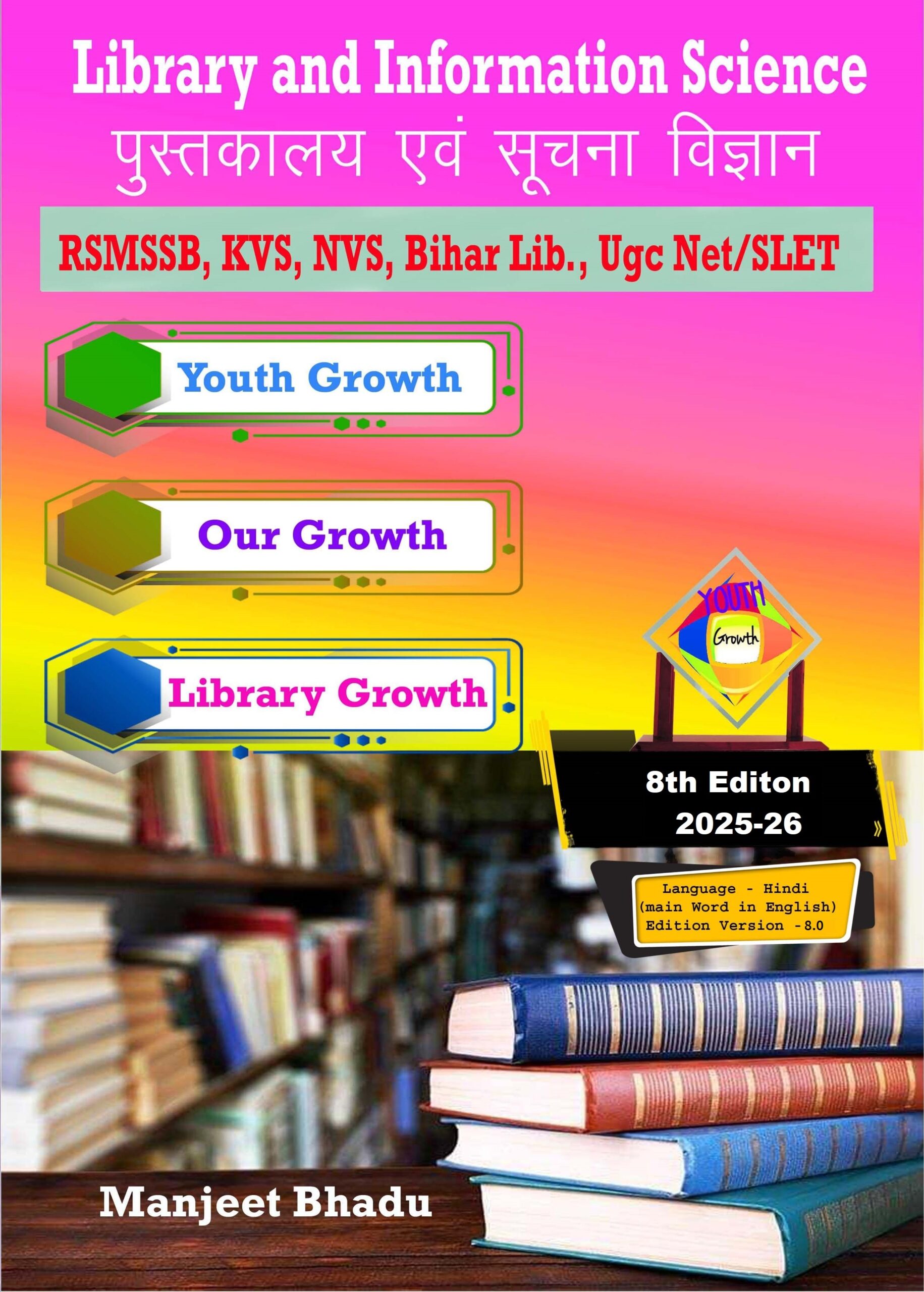
8th editionLibrary and Information Science BookEMRS · CRE · RPSC College Librarian · DSSSB · RSMSSB · KVS · NVS · Bihar Librarian · UGC NETपूरा सिलेबस, टॉपिक-वाइज़ नोट्स · घर तक डिलीवरी★ 4.7 (81)₹489
Hindi + EnglishLibrary Science MCQ Practice Set — Volume 1RPSC · RSMSSB · EMRS · DSSSB · KVS · NVS · UGC NET7000+ वस्तुनिष्ठ प्रश्न, चैप्टर-वाइज़ प्रैक्टिस सेट · उत्तर सहित★ 4.6 (36)₹259
10 अभ्यास प्रश्न / 10 Practice MCQs
SLET पेपर-II स्तर के 10 प्रश्न — आधारशिला, वर्गीकरण, संदर्भ सेवा और सूचना प्रौद्योगिकी।
Ten questions at SLET Paper-II level — foundations, classification, reference service and information technology.
“ज्ञान का ब्रह्मांड” (Universe of Knowledge) शब्द का प्रयोग किस संदर्भ में होता है?In what context is the term “Universe of Knowledge” used?
- (a) पुस्तकालय भवन की योजना / Library building planning
- (b) समस्त ज्ञान का समग्र क्षेत्र, जिसे वर्गीकरण व्यवस्थित करता है / The entire field of knowledge that classification organises
- (c) सदस्य पंजीकरण / Member registration
- (d) बजट निर्माण / Budget preparation
उत्तर देखें / Show answer
(b) समस्त ज्ञान का समग्र क्षेत्र, जिसे वर्गीकरण व्यवस्थित करता है — रंगनाथन ने इसी अवधारणा से विषय-निर्माण की विधियाँ (fission, fusion, distillation आदि) समझाईं।Ranganathan used this concept to explain the modes of subject formation — fission, fusion, distillation and so on.
LC Classification (लाइब्रेरी ऑफ़ कांग्रेस वर्गीकरण) किस प्रकार की पद्धति है?What kind of scheme is Library of Congress Classification?
- (a) पूर्णतः फ़ैसेटेड / Fully faceted
- (b) गणनात्मक (enumerative) / Enumerative
- (c) दशमलव / Decimal
- (d) वर्णमालीय विषय / Alphabetico-subject
उत्तर देखें / Show answer
(b) गणनात्मक (enumerative) / Enumerative — LCC में हर विषय पहले से सूचीबद्ध रहता है; कोलन वर्गीकरण फ़ैसेटेड है और DDC लगभग गणनात्मक पर दशमलव आधारित।In LCC every subject is enumerated in advance; Colon Classification is faceted, while DDC is largely enumerative on a decimal base.
“कटर संख्या” (Cutter number) का उपयोग किसलिए होता है?What is a Cutter number used for?
- (a) पुस्तक का मूल्य दर्शाने / Showing the price
- (b) एक ही वर्ग संख्या की पुस्तकों को लेखक के अनुसार क्रम देने / Arranging books of the same class number by author
- (c) पुस्तक की मोटाई नापने / Measuring thickness
- (d) प्रकाशन वर्ष बताने / Indicating the year of publication
उत्तर देखें / Show answer
(b) एक ही वर्ग संख्या की पुस्तकों को लेखक के अनुसार क्रम देने — वर्ग संख्या और कटर संख्या मिलकर “कॉल नंबर” बनाते हैं, जिससे अलमारी पर हर पुस्तक का अपना स्थान तय होता है।The class number and Cutter number together form the call number, which fixes each book’s place on the shelf.
“इंटर-लाइब्रेरी लोन” (ILL) का मुख्य उद्देश्य क्या है?What is the main purpose of inter-library loan (ILL)?
- (a) पुस्तकें बेचना / Selling books
- (b) जो सामग्री अपने पुस्तकालय में न हो, वह दूसरे पुस्तकालय से मँगाना / Obtaining material not held locally from another library
- (c) सदस्यता बढ़ाना / Increasing membership
- (d) पुरानी पुस्तकें हटाना / Removing old books
उत्तर देखें / Show answer
(b) जो सामग्री अपने पुस्तकालय में न हो, वह दूसरे पुस्तकालय से मँगाना — ILL संसाधन साझेदारी का आधार है; भारत में DELNET और INFLIBNET इसी काम को संगठित रूप देते हैं।ILL is the basis of resource sharing; in India DELNET and INFLIBNET organise it.
“अनुक्रमणिकन” (indexing) में “pre-coordinate” और “post-coordinate” में क्या अंतर है?What distinguishes pre-coordinate from post-coordinate indexing?
- (a) पहले में पद खोज के समय जोड़े जाते हैं, दूसरे में पहले से / In the first, terms are combined at search time; in the second, in advance
- (b) पहले में पद अनुक्रमणिका बनाते समय ही जोड़ दिए जाते हैं, दूसरे में खोज के समय / In the first, terms are combined while indexing; in the second, at search time
- (c) कोई अंतर नहीं / No difference
- (d) पहला केवल पुस्तकों के लिए / The first is only for books
उत्तर देखें / Show answer
(b) पहले में पद अनुक्रमणिका बनाते समय ही जोड़ दिए जाते हैं, दूसरे में खोज के समय — PRECIS और चेन इंडेक्सिंग pre-coordinate हैं; यूनिटर्म और कीवर्ड आधारित खोज post-coordinate।PRECIS and chain indexing are pre-coordinate; uniterm and keyword searching are post-coordinate.
“चेन इंडेक्सिंग” (Chain Indexing) किसने विकसित की?Who developed chain indexing?
- (a) एस. आर. रंगनाथन / S. R. Ranganathan
- (b) डेरेक ऑस्टिन / Derek Austin
- (c) मोर्टिमर टाउबे / Mortimer Taube
- (d) ह्यूज़ क्लेवर्डन / Cyril Cleverdon
उत्तर देखें / Show answer
(a) एस. आर. रंगनाथन / S. R. Ranganathan — रंगनाथन ने चेन इंडेक्सिंग दी; PRECIS डेरेक ऑस्टिन की, यूनिटर्म टाउबे की और क्रैनफ़ील्ड परीक्षण क्लेवर्डन के हैं।Ranganathan gave chain indexing; PRECIS is Derek Austin’s, uniterm is Taube’s and the Cranfield tests are Cleverdon’s.
“संघीय सूची” (Union Catalogue) क्या होती है?What is a union catalogue?
- (a) एक पुस्तकालय की पूरी सूची / The full catalogue of one library
- (b) कई पुस्तकालयों के संग्रह की संयुक्त सूची / A combined catalogue of the holdings of several libraries
- (c) केवल पत्रिकाओं की सूची / A list of periodicals only
- (d) कर्मचारियों की सूची / A list of staff
उत्तर देखें / Show answer
(b) कई पुस्तकालयों के संग्रह की संयुक्त सूची — संघीय सूची से पता चलता है कि कोई पुस्तक किस पुस्तकालय में है — अंतर-पुस्तकालय ऋण इसी पर टिका है।A union catalogue shows which library holds a given item, and inter-library loan rests on it.
“ओपन एक्सेस” में “गोल्ड रोड” का क्या अर्थ है?What does the “gold road” mean in open access?
- (a) लेखक द्वारा भंडार में स्व-संग्रहण / Self-archiving by the author
- (b) ओपन एक्सेस पत्रिका में प्रकाशन / Publishing in an open-access journal
- (c) पुस्तकालय द्वारा सदस्यता / Subscription by the library
- (d) प्रकाशक द्वारा प्रतिबंध / An embargo by the publisher
उत्तर देखें / Show answer
(b) ओपन एक्सेस पत्रिका में प्रकाशन — गोल्ड रोड में लेख प्रकाशन के समय से ही मुफ़्त उपलब्ध होता है; ग्रीन रोड में लेखक उसे भंडार में रखता है।On the gold road the article is free from the moment of publication; on the green road the author deposits it in a repository.
“डिजिटल अभिरक्षण” (digital preservation) में “माइग्रेशन” का क्या अर्थ है?In digital preservation, what does “migration” mean?
- (a) पुस्तकालय का स्थानांतरण / Moving the library premises
- (b) सामग्री को पुराने प्रारूप से नए प्रारूप में बदलना / Converting material from an obsolete format to a current one
- (c) कर्मचारियों का तबादला / Transferring staff
- (d) पाठकों का दूसरे पुस्तकालय जाना / Readers moving to another library
उत्तर देखें / Show answer
(b) सामग्री को पुराने प्रारूप से नए प्रारूप में बदलना — माइग्रेशन और एमुलेशन, दोनों डिजिटल अप्रचलन से बचने की रणनीतियाँ हैं — पहली में फ़ाइल बदलती है, दूसरी में पुराना वातावरण नक़ल किया जाता है।Migration and emulation are both strategies against digital obsolescence — the first changes the file, the second recreates the old environment.
IATLIS किस प्रकार का संगठन है?What kind of organisation is IATLIS?
- (a) पुस्तकालय शिक्षकों का संघ / An association of teachers of library science
- (b) प्रकाशकों का संघ / An association of publishers
- (c) सरकारी विभाग / A government department
- (d) अंतरराष्ट्रीय मानक संस्था / An international standards body
उत्तर देखें / Show answer
(a) पुस्तकालय शिक्षकों का संघ / An association of teachers of library science — IATLIS यानी Indian Association of Teachers of Library and Information Science — यह LIS शिक्षण और पाठ्यक्रम से जुड़े प्रश्नों पर काम करता है।IATLIS is the Indian Association of Teachers of Library and Information Science, concerned with LIS teaching and curriculum.
दूसरे राज्यों के प्रश्नपत्र भी देखें / Papers from Other States
इन सबका पाठ्यक्रम UGC NET पर आधारित है, इसलिए आप किसी भी राज्य में हों, ये सब आपके अभ्यास के काम आएँगे।
All of these follow the UGC NET syllabus, so wherever you are, every one of them is usable practice.
सभी राज्यों की SET परीक्षाएँ एक जगह देखें / See every state’s SET papers in one place →
पूछे जाने वाले प्रश्न / Frequently asked
क्या असम के अलावा दूसरे पूर्वोत्तर राज्य के अभ्यर्थी भी यही परीक्षा देते हैं? हाँ। यह आयोग पूरे पूर्वोत्तर क्षेत्र के लिए एक ही परीक्षा कराता है — आठों राज्यों के केंद्र इसी में आते हैं। इसीलिए इसे “SLET NE” भी कहा जाता है।
Do candidates from the other North Eastern states sit this same test? Yes. The commission conducts one examination for the whole region, with centres in all eight states, which is why it is also called SLET NE.
कुंजी में “No correct option” लिखा मिले तो क्या समझें? इसका अर्थ है कि आपत्तियों के बाद विशेषज्ञ समिति ने माना कि उस प्रश्न का कोई विकल्प सही नहीं था। ऐसे प्रश्न आमतौर पर सबको अंक देकर या हटाकर निपटाए जाते हैं — अपना स्कोर निकालते समय उन्हें अलग रखें।
What does “No correct option” in the key mean? It means that, after objections, the expert committee accepted that none of the options was correct. Such questions are usually resolved by awarding marks to all or by dropping them — set them aside when working out your score.
पुराने वर्षों (2022 और उससे पहले) की कुंजियाँ कहाँ हैं? आयोग की वेबसाइट पर इस समय 2023 से आगे की ही कुंजियाँ हैं; हमने पुराने पतों की भी जाँच की, वे मौजूद नहीं हैं। जैसे ही आयोग पुराने दस्तावेज़ उपलब्ध कराएगा, हम यहीं जोड़ देंगे।
Where are the keys for 2022 and earlier? The commission’s site currently carries keys from 2023 onwards; we checked the older addresses too and they are not there. We will add them here if the commission makes them available.
📝 Youth Growth Online Test Series – परीक्षा की पूरी तैयारी (Hindi + English)
नीचे दिए किसी भी Test Series में Free Demo देखें या सीधे खरीदें।
📚 Recommended books & practice sets
View all books → Youth Growth Library Science MCQ Practice SET (Hindi And English) Volume-1 For-RPSC, RSMSSB, EMRS, DSSSB, KVS, NVS, UGC NET By ManjeetBhadu
4.6(36)Youth Growth Library Science MCQ Practice SET (Hindi And English) Volume-1 Youth Growth Library Science MCQ Practice SET…
Youth Growth Library and Information Science Book - 8th edition For EMRS librarian Book, RPSC college Librarian Book, DSSSB Librarian book, RSMSSB Librarian book, KVS Librarian book, NVS Librarian book, Bihar Librarian book, UGC NET Librarian book
4.7(81)Youth growth Our Growth Library Growth book (Library and Information Science Exercise Book) for EMRS librarian Book, RPSC…
Your order
⏳ Payment verification takes up to 24 hours. Once verified, courier dispatch and shipment processing will begin within 1 working day.