NTA UGC NET — Library and Information Science (Paper-II, 2020) के 2020 और 2021 दोनों वर्षों के प्रश्नपत्र राष्ट्रीय परीक्षा एजेंसी (NTA) की आधिकारिक वेबसाइट पर उपलब्ध हैं। नीचे सीधा PDF डाउनलोड लिंक दिया गया है।
The NTA UGC NET Library and Information Science question paper (2020) is available on the official National Testing Agency website. Download the PDF below.
परीक्षा का विवरण / Exam Details
| एजेंसी / Agency | राष्ट्रीय परीक्षा एजेंसी (NTA) |
| परीक्षा / Exam | UGC NET |
| विषय / Subject | Library and Information Science (विषय कोड 59) |
| वर्ष / Year | 2020 |
| पेपर / Paper | Paper-II (विषय आधारित) |
| प्रश्न प्रकार / Type | बहुविकल्पीय (MCQ), कोई नकारात्मक अंकन नहीं |
| आधिकारिक वेबसाइट | ugcnet.nta.ac.in |
UGC NET LIS का सिलेबस किन 10 इकाइयों में बँटा है?
- सूचना, संचार एवं समाज / Information, Communication and Society
- सूचना स्रोत एवं सेवाएँ / Information Sources, Systems and Services
- ज्ञान संगठन एवं सूचना प्रसंस्करण / Knowledge Organisation and Processing
- पुस्तकालय प्रबंधन / Management of Libraries and Information Centres
- सूचना प्रौद्योगिकी की बुनियाद / Information Technology Basics
- सूचना पुनर्प्राप्ति प्रणाली / Information Retrieval System
- पुस्तकालय स्वचालन एवं डिजिटल लाइब्रेरी / Library Automation and Digital Libraries
- शोध पद्धति एवं ग्रंथमिति / Research Methods and Bibliometrics
- अकादमिक पुस्तकालय प्रणाली / Academic Library System
- सूचना एवं ज्ञान समाज / Information and Knowledge Society
NET के पुराने पेपर से तैयारी / Preparing from past NET papers
UGC NET में लगभग 20–25% प्रश्न दोहराए जाते हैं या उसी अवधारणा को नए शब्दों में पूछा जाता है। इसलिए पिछले 5–6 चक्रों के पेपर हल करना सबसे तेज़ तरीका है। Assertion-Reason, Matching और Sequence वाले प्रश्न NET की पहचान हैं — इनका अभ्यास अलग से करें।
Around a fifth of UGC NET questions repeat or reappear in reworded form, so solving the last five or six cycles is the fastest way to prepare. Assertion-Reason, matching and sequence questions are the signature NET formats — practise them separately.
अगर ऊपर दिए गए प्रश्नपत्र में कोई प्रश्न, टॉपिक या चैप्टर समझ में न आए, तो नीचे दिया गया कोर्स उसी कमी को भरने के लिए बना है:
- हिंदी और English दोनों में — जिस भाषा में पेपर देना है, अभ्यास भी उसी भाषा में।
- नवीनतम सिलेबस के अनुसार अपडेटेड — UGC NET और अन्य भर्तियों के सिलेबस में जो बदलाव हुए हैं, वे सब शामिल।
- लाइब्रेरी साइंस के ताज़ा करंट अफेयर्स — नए नियम, नई संस्थाएँ, नए पदाधिकारी और नई योजनाएँ, जो पुरानी किताबों में नहीं मिलतीं।
- पुराने प्रश्नपत्र भी अंदर शामिल — बिखरे हुए नहीं, बल्कि चैप्टर-वाइज़ बँटे हुए, ताकि एक ही टॉपिक के सारे पुराने प्रश्न एक साथ हल हों।
- 23,000+ प्रश्न, 138 चैप्टर, 700+ टॉपिक — हर टेस्ट के बाद रिपोर्ट मिलती है, जिससे कमज़ोर टॉपिक तुरंत पकड़ में आ जाता है।
- फ्री डेमो उपलब्ध — पैसे लगाने से पहले खुद परख लें।
सबसे अच्छा तरीका: ऊपर दिया गया पुराना प्रश्नपत्र पहले खुद हल करें, फिर जिन टॉपिक में गलती हुई उन्हीं चैप्टर के टेस्ट कोर्स में लगाएँ। दो-तीन हफ़्ते में फ़र्क़ साफ़ दिखने लगेगा।
If any question, topic or chapter in the paper above is still unclear, the course below is built to close exactly that gap:
- In both Hindi and English — practise in the same language you will write the exam in.
- Updated to the latest syllabus — every recent change in the UGC NET and other recruitment syllabi is already covered.
- Latest library science current affairs — new rules, new institutions, new office bearers and new schemes that older books simply do not carry.
- Previous year papers included — not scattered, but sorted chapter-wise, so every old question on one topic comes together.
- 23,000+ questions, 138 chapters, 700+ topics — a report after every test shows your weak topics at once.
- Free demo available — try it yourself before you pay.
The best way: first solve the paper above on your own, then take the chapter tests for exactly the topics you got wrong. The difference shows within two or three weeks.
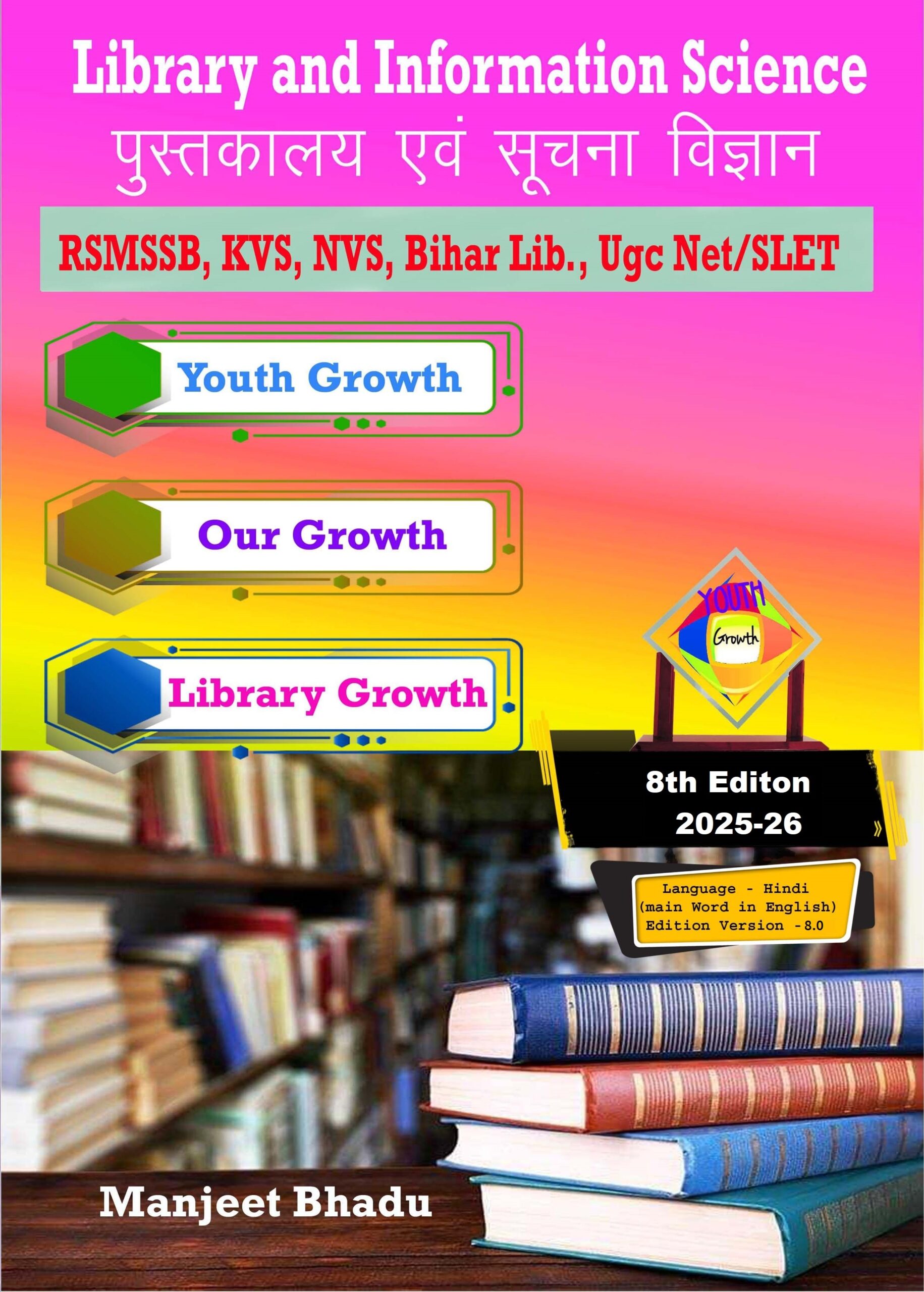 8th editionLibrary and Information Science BookEMRS · CRE · RPSC College Librarian · DSSSB · RSMSSB · KVS · NVS · Bihar Librarian · UGC NET
पूरा सिलेबस, टॉपिक-वाइज़ नोट्स · घर तक डिलीवरी★ 4.7 (81)₹489
 Hindi + EnglishLibrary Science MCQ Practice Set — Volume 1RPSC · RSMSSB · EMRS · DSSSB · KVS · NVS · UGC NET
7000+ वस्तुनिष्ठ प्रश्न, चैप्टर-वाइज़ प्रैक्टिस सेट · उत्तर सहित★ 4.6 (36)₹259
10 अभ्यास प्रश्न / 10 Practice MCQs
UGC NET (LIS) स्तर के 10 अभ्यास प्रश्न (ये मूल प्रश्नपत्र के प्रश्न नहीं हैं)।
Ten practice questions at UGC NET (LIS) level — not the actual questions from the official paper.
UGC NET में Library and Information Science का विषय कोड क्या है?What is the UGC NET subject code for Library and Information Science?
- (a) 58
- (b) 59
- (c) 60
- (d) 62
उत्तर देखें / Show answer
(b) 59 — विषय कोड 59 है।The subject code is 59.
UGC NET वर्तमान में कौन आयोजित करता है?Who conducts UGC NET at present?
- (a) UGC
- (b) CBSE
- (c) NTA
- (d) AICTE
उत्तर देखें / Show answer
(c) NTA — 2018 से राष्ट्रीय परीक्षा एजेंसी (NTA) UGC NET आयोजित करती है।The National Testing Agency (NTA) has conducted UGC NET since 2018.
“Five Laws of Library Science” के अंग्रेज़ी अनुवादक के रूप में किसे जाना जाता है?Who is associated with the Five Laws of Library Science?
- (a) कटर / Cutter
- (b) रंगनाथन / Ranganathan
- (c) ब्लिस / Bliss
- (d) ओटलेट / Otlet
उत्तर देखें / Show answer
(b) रंगनाथन / Ranganathan — एस. आर. रंगनाथन ने 1931 में पाँच नियम दिए।S. R. Ranganathan gave the Five Laws in 1931.
“Knowledge Society” शब्द का संबंध किससे है?The term “Knowledge Society” is associated with what?
- (a) कृषि आधारित समाज
- (b) ज्ञान एवं सूचना आधारित अर्थव्यवस्था
- (c) औद्योगिक समाज
- (d) पारंपरिक समाज
उत्तर देखें / Show answer
(b) ज्ञान एवं सूचना आधारित अर्थव्यवस्था — जहाँ ज्ञान का सृजन और उपयोग विकास का मुख्य आधार हो।A society where the creation and use of knowledge drives development.
Zipf का नियम किससे संबंधित है?Zipf’s Law relates to what?
- (a) शब्दों की आवृत्ति / Word frequency
- (b) पत्रिका बिखराव / Journal scattering
- (c) लेखक उत्पादकता / Author productivity
- (d) उद्धरण / Citations
उत्तर देखें / Show answer
(a) शब्दों की आवृत्ति / Word frequency — किसी पाठ में शब्दों की आवृत्ति और उनकी रैंक का संबंध।It relates the frequency of words in a text to their rank.
“Institutional Repository” बनाने के लिए सर्वाधिक प्रयुक्त सॉफ्टवेयर कौन-सा है?Which software is most used for building an institutional repository?
- (a) Koha
- (b) DSpace
- (c) SOUL
- (d) Libsys
उत्तर देखें / Show answer
(b) DSpace — DSpace को MIT और HP ने विकसित किया।DSpace was developed by MIT and HP.
“Web 2.0” की मुख्य विशेषता क्या है?What is the key feature of Web 2.0?
- (a) केवल पढ़ना / Read only
- (b) उपयोगकर्ता की भागीदारी / User participation
- (c) केवल टेक्स्ट / Text only
- (d) ऑफ़लाइन काम / Offline working
उत्तर देखें / Show answer
(b) उपयोगकर्ता की भागीदारी / User participation — Web 2.0 में उपयोगकर्ता स्वयं सामग्री बनाता और साझा करता है।In Web 2.0 users create and share content themselves.
CAS और SDI में मुख्य अंतर क्या है?What is the main difference between CAS and SDI?
- (a) CAS सामान्य, SDI व्यक्तिगत
- (b) CAS व्यक्तिगत, SDI सामान्य
- (c) दोनों समान
- (d) कोई अंतर नहीं
उत्तर देखें / Show answer
(a) CAS सामान्य, SDI व्यक्तिगत — CAS सभी उपयोगकर्ताओं के लिए, SDI व्यक्ति विशेष की रुचि के अनुसार।CAS serves all users, while SDI is tailored to an individual’s interest profile.
“Metadata” का सरल अर्थ क्या है?What does “metadata” simply mean?
- (a) डेटा के बारे में डेटा / Data about data
- (b) बड़ा डेटा / Big data
- (c) गलत डेटा / Wrong data
- (d) पुराना डेटा / Old data
उत्तर देखें / Show answer
(a) डेटा के बारे में डेटा / Data about data — मेटाडेटा किसी संसाधन का वर्णन करने वाला संरचित डेटा है।Metadata is structured data that describes a resource.
“Open Access” का मुख्य उद्देश्य क्या है?What is the main aim of Open Access?
- (a) शोध को निःशुल्क उपलब्ध कराना
- (b) शोध छिपाना
- (c) केवल प्रिंट प्रकाशन
- (d) पुस्तकालय बंद करना
उत्तर देखें / Show answer
(a) शोध को निःशुल्क उपलब्ध कराना — शोध साहित्य को बिना शुल्क और बिना बाधा के सबके लिए उपलब्ध कराना।To make research literature freely and openly available to everyone.
📝 Youth Growth Online Test Series – परीक्षा की पूरी तैयारी (Hindi + English)
नीचे दिए किसी भी Test Series में Free Demo देखें या सीधे खरीदें।
📚 Recommended books & practice sets
View all books → Youth Growth Library Science MCQ Practice SET (Hindi And English) Volume-1 For-RPSC, RSMSSB, EMRS, DSSSB, KVS, NVS, UGC NET By ManjeetBhadu
4.6(36)Youth Growth Library Science MCQ Practice SET (Hindi And English) Volume-1 Youth Growth Library Science MCQ Practice SET…
Youth Growth Library and Information Science Book - 8th edition For EMRS librarian Book, RPSC college Librarian Book, DSSSB Librarian book, RSMSSB Librarian book, KVS Librarian book, NVS Librarian book, Bihar Librarian book, UGC NET Librarian book
4.7(81)Youth growth Our Growth Library Growth book (Library and Information Science Exercise Book) for EMRS librarian Book, RPSC…
Your order
⏳ Payment verification takes up to 24 hours. Once verified, courier dispatch and shipment processing will begin within 1 working day.